

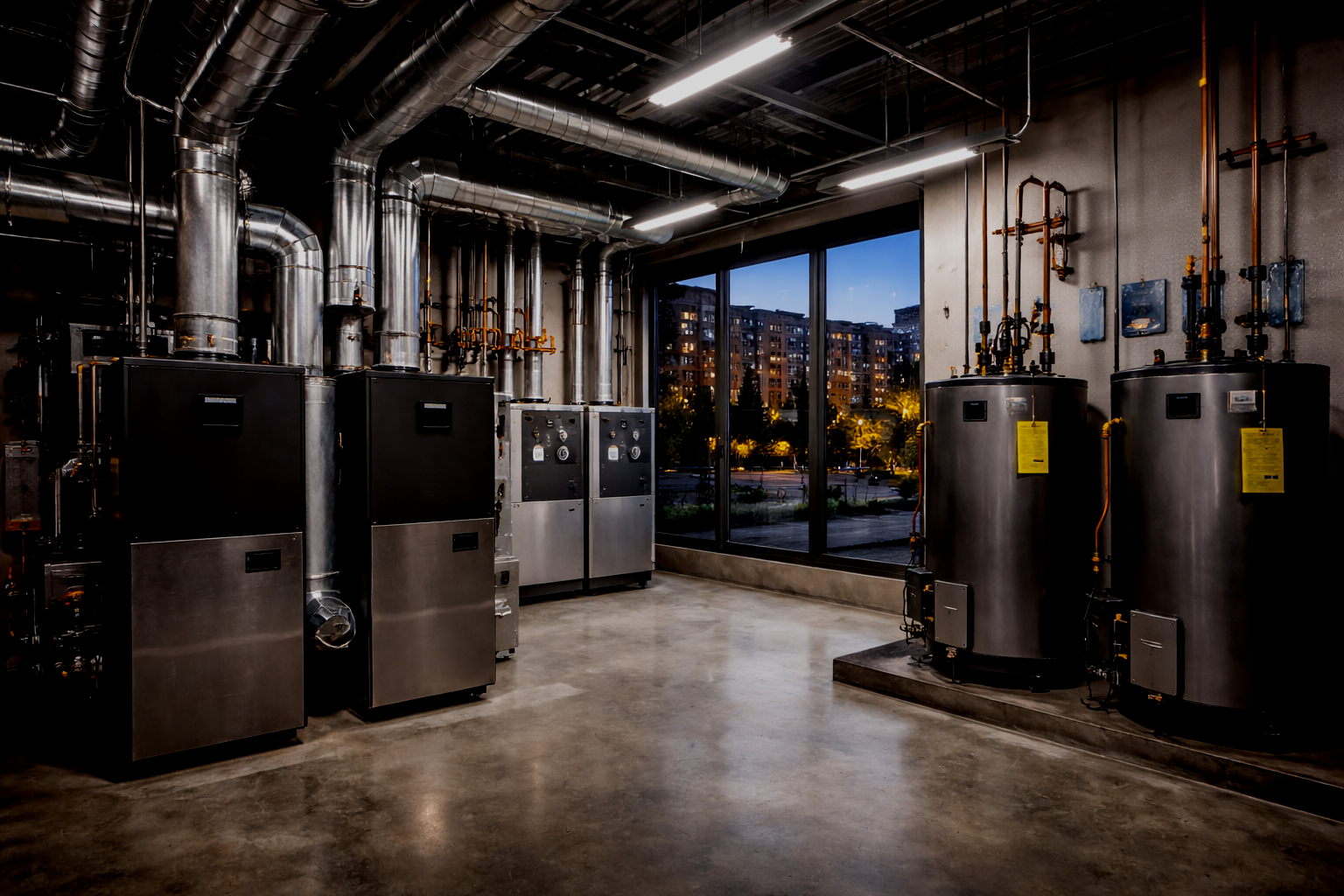
Buildings remember nothing.
That ends here.
Every mechanical and energy system in your portfolio has a history. Installations, failures, upgrades, replacements. That history is your most valuable infrastructure asset — and right now, most of it is gone. Lost to contractor changes, ownership transitions, and systems that were never designed to remember.
Harmelo gives infrastructure a memory it keeps forever.
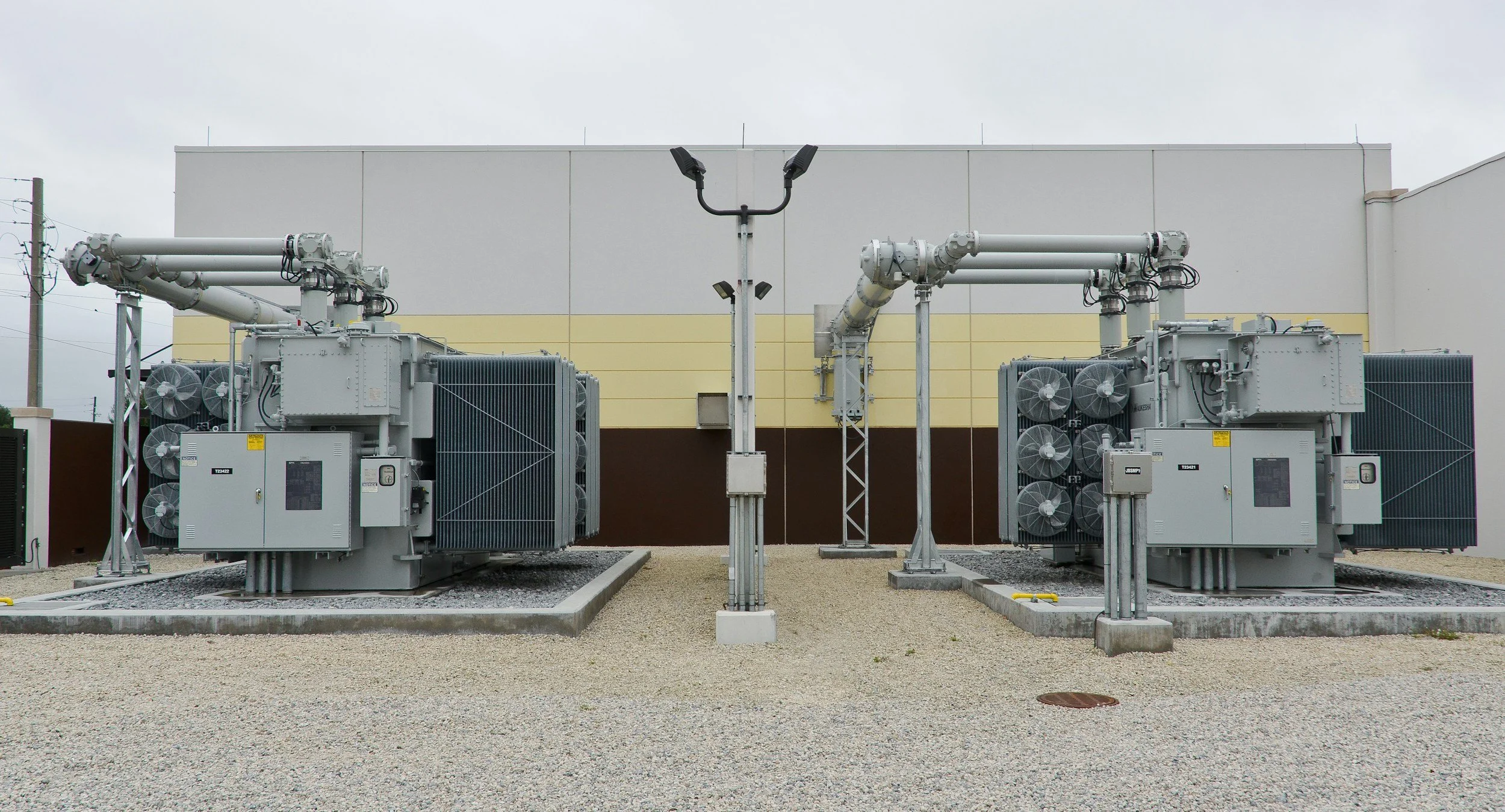
You inherited systems. You didn't inherit their history.
The chiller on the roof has been running since 2009. Three owners ago. Five contractors ago. Two software platform ago. Ask anyone in that building what it's actually done over its lifetime, every service call, every anomaly, every efficiency drop and the answer is silence.
"The result isn't lost paperwork. It's decisions made in the dark, on infrastructure that represents decades of capital investment."
This isn't an edge case. It's the default state of mechanical and energy infrastructure everywhere. And it has consequences that compound over time.
15–30 yrs- Typical system lifespan — longer than most records last
40–60%- Of building energy use, is driven by mechanical systems
30%- Of global energy consumption is from buildings
01 Homebuyers purchase blind: No visibility into mechanical condition, service history, or remaining lifecycle. A major asset changes hands with almost no infrastructure intelligence attached to it.
02 Capital plans are built on guesswork: Without lifecycle history, replacement forecasts default to age estimates and assumption. Budgets spike when systems fail — not when data says they should be replaced.
03 Electrification programs fly blind: Governments deploying solar, storage, and EV infrastructure at scale have no persistent way to track what was installed, how it performed, or when it needs replacing.
04 Every transition resets the clock: New owner. New contractor. New platform. Each transition scatters what little continuity existed. Infrastructure keeps running. Its knowledge disappears.

An identity that outlasts every transition.
Think about what a street address does for a building. It doesn't belong to any tenant or owner, it belongs to the location, permanently. No matter who moves in or out, the address remains. The history attached to it remains.
Harmelo does this for the systems inside. Through HMIN™ and HEIN™, every mechanical and energy system receives a persistent identifier the moment it enters the Registry. That identity is immutable. It survives every contractor change, every ownership transition, every platform migration.
HMIN™ (Mechanical Identification Number™)
For HVAC, mechanical, and building systems. One identifier, assigned once, attached for life. Across installation, service, ownership changes, and full replacement cycles.
HEIN™ (Energy Identification Number™)
For solar, battery storage, EV charging, meters, and grid-connected systems. Persistent across electrification cycles, retrofit programs, and decades of ownership transitions.
The identity doesn't belong to you. It doesn't belong to the contractor. It belongs to the system and it follows the system forward, regardless of what changes around it.
System registered→Identity assigned→History accumulates→Intelligence compounds

Persistent identity isn't a record-keeping feature. It's the condition that makes every other form of infrastructure intelligence possible. Once a system has memory, you can build on it.
Capital planning: Replace reactive budget spikes with replacement forecasts grounded in real lifecycle data — years in advance.
Predictive maintenance: See failure and degradation signals before they become emergencies. Act on patterns, not panic.
Emissions visibility: Know which systems are aging, inefficient, and overdue for electrification — across every building in your portfolio.
Due diligence: Give buyers, lenders, and insurers verified infrastructure history at the point of transaction — not an estimate.
Electrification planning: Track distributed energy performance and retrofit outcomes across full lifecycles, not just point-in-time snapshots.
Portfolio governance: Accountability across every system, building, and region — structured, portable, and durable across decades.
Identity is the foundation. Everything else follows.

The history is being written right now.
The question is whether it survives.
Every system in your portfolio is generating operational history today. Without persistent identity in place, that history disappears the moment something changes. With it, it compounds into the most valuable intelligence your organization has ever had about its infrastructure.