Infrastructure registries for building systems

Harmelo operates registry infrastructure that assigns permanent identifiers to mechanical and energy systems so their lifecycle history remains visible across contractors, ownership changes, and decades of operation.

Long-lived infrastructure operates without continuous records

Long-lived infrastructure operates without continuous records.

Buildings last decades.
The systems inside them are replaced many times.

Yet the records explaining their history rarely persist.

When documentation fragments across contractors, software platforms, and ownership transitions:

• operational history becomes incomplete
• accountability becomes unclear
• capital planning becomes reactive

Harmelo introduces persistent identity so lifecycle records remain attached to the system itself.

Buildings last for decades. The systems inside them are replaced multiple times over their lifespan. Yet the records that explain those systems — installation history, service interventions, warranty status, and replacement cycles — rarely persist across those transitions.


Why lifecycle continuity matters

Mechanical and energy systems introduce long-term operational and financial exposure across building portfolios.

Illustrative scenario - large housing portfolio:

Assume multiple generations of equipment across thousands of units, with fragmented documentation and inconsistent historical visibility.

With persistent registry continuity:

• Lifecycle interventions can be anticipated
• Warranty positions remain clear
• Administrative burden is reduced
• Capital planning stabilizes
• Institutional defensibility improves

Continuity transforms uncertainty into structured oversight.

Persistent identity strengthens:

• Long-range capital planning
• Budget stability
• Audit readiness
• Forecast confidence
• Operational coordination

Mechanical and energy systems continue to age. Visibility improves.

Mechanical and energy systems operate across long lifespans, yet their histories are rarely preserved in a durable, continuous record.

As documentation disperses across contractors, software platforms, and ownership transitions:

• Lifecycle decisions rely on partial information
• Responsibility becomes unclear
• Planning horizons shorten
• Risk accumulates silently

Infrastructure performs best when continuity exists.

Harmelo establishes a persistent identity layer so system history remains intact across decades.

The infrastructure continuity gap

A neutral registry layer for infrastructure systems

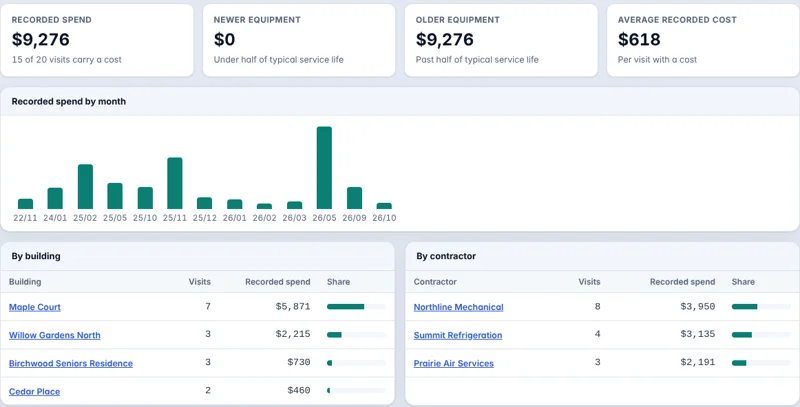
Harmelo operates as a provider-agnostic registry that assigns persistent identifiers to mechanical and energy assets and preserves their lifecycle records over time.

Persistent identity

Each system receives a permanent identification record that remains associated with the asset throughout its lifecycle.

Lifecycle continuity

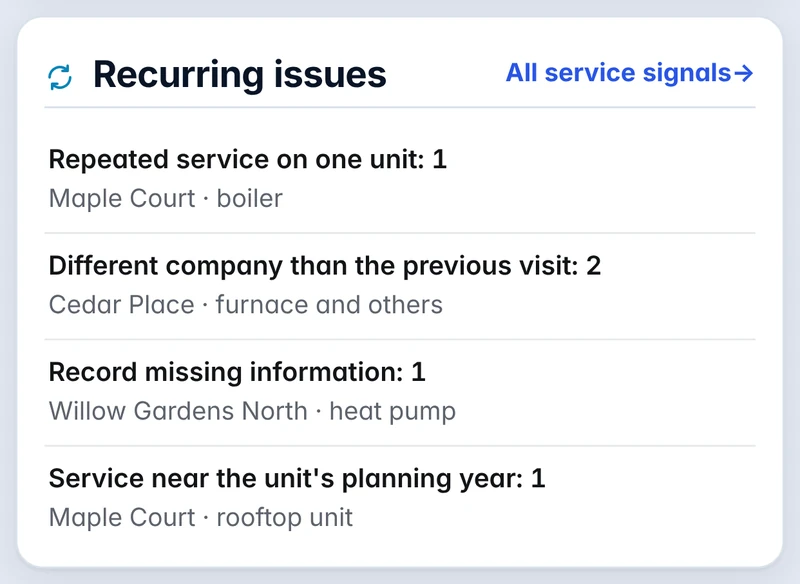
Installation, service events, documented interventions, and transitions remain connected to a continuous historical record.

Visibility across time

Organizations maintain access to verified system context regardless of contractor changes, ownership transfers, or technology transitions.

The registry does not operate equipment.

It preserves the historical context that enables informed decisions.

Supporting long-horizon infrastructure stewards

Municipalities & Public Agencies

Harmelo provides a standardized registry layer that supports oversight across public housing and infrastructure portfolios.

• Portfolio visibility across systems
• Improved lifecycle coordination
• Stronger governance and reporting

Owners & Operators

Organizations responsible for buildings and energy assets maintain continuity across equipment generations.

• Durable lifecycle records
• Reduced informational gaps
• Long-term operational clarity

Service Providers

Contractors and technical operators contribute to a persistent record of work performed without changing existing workflows.

• Verified documentation continuity
• Clear historical context for future service
• Preservation of institutional knowledge

Infrastructure stewardship improves when history persists.

The infrastructure identity layer

Harmelo establishes a durable identification framework for mechanical and energy systems, providing a persistent reference layer across their operational lifecycles.

Each registered asset maintains a continuous record that remains intact:

As ownership changes
As service providers change
As systems are replaced
As infrastructure evolves

The registry functions as a long-term system of record, preserving verified lifecycle history without altering operational workflows.

For organizations managing complex portfolios, this creates continuity measured in decades.